
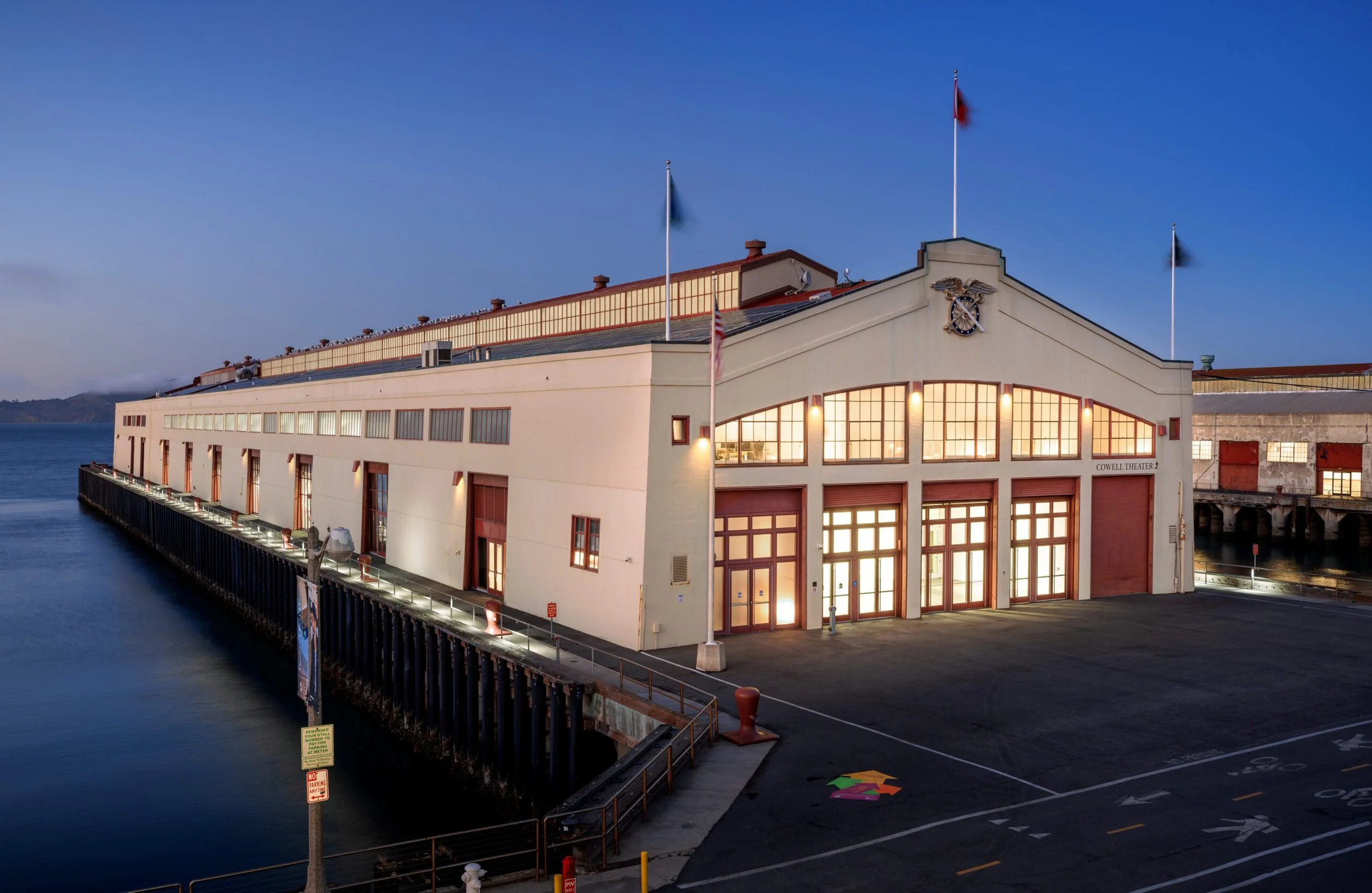
Fort Mason Center for Arts & Culture is a Waterfront event campus in San Francisco. Strong fit for waterfront activations, conferences, galas, and sponsor events.
Fort Mason markets its venues as San Francisco event space rentals and corporate meeting venues.
The venue section says the 13-acre campus offers 11 venue options ranging from 500 to 50,000 square feet.
For exhibitor work, the center for Arts & Culture has to be read as a room, a loading path, a service-ordering process, and a live guest environment at the same time.
Verified venue facts for Fort Mason Center for Arts & Culture
- Fort Mason markets its venues as San Francisco event space rentals and corporate meeting venues.
- The venue section says the 13-acre campus offers 11 venue options ranging from 500 to 50,000 square feet.
- The same section says the campus provides more than 100,000 square feet of rentable space.
What to confirm at Fort Mason Center for Arts & Culture
- Current event manual, contractor requirements, and service-ordering deadlines.
- Loading access, freight windows, marshaling details, and storage limits.
- House AV, electrical, rigging, internet, and any exclusive service boundaries.
- Room turnover needs, guest-flow pinch points, and where supervisor coverage belongs.
- Mixed and venue-specific. Moscone publishes explicit union-jurisdiction and contractor rules, so San Francisco convention-center labor can be described precisely there. Other Bay Area venues in this research set emphasize in-house event services or planner coordination, but they do not all publish public union-jurisdiction sections. Blanket union-city or non-union-market claims are avoided unless the current venue rules support them.
Where Fort Mason Center for Arts & Culture fits
The center for Arts & Culture is a Waterfront event campus in San Francisco, and its role in the market is specific: Strong fit for waterfront activations, conferences, galas, and sponsor events.
Fort Mason markets its venues as San Francisco event space rentals and corporate meeting venues.
The center for Arts & Culture belongs to the San Francisco Core operating picture, but the room still needs its own plan for access, services, staging, and guest movement.
Published facts that affect planning
The venue section says the 13-acre campus offers 11 venue options ranging from 500 to 50,000 square feet.
The same section says the campus provides more than 100,000 square feet of rentable space.
The source trail for this venue includes https://fortmason.org/venues/.
Move-in, services, and technical coordination at Fort Mason Center for Arts & Culture
Production teams need to confirm dock access, freight receiving, house-service requirements, electrical ordering, internet, AV handoff, and whether any rigging or special approvals are involved.
Mixed and venue-specific. Moscone publishes explicit union-jurisdiction and contractor rules, so San Francisco convention-center labor can be described precisely there. Other Bay Area venues in this research set emphasize in-house event services or planner coordination, but they do not all publish public union-jurisdiction sections. Blanket union-city or non-union-market claims are avoided unless the current venue rules support them.
At the center for Arts & Culture, these questions matter because room setup, technical support, and service ordering can change the install call and the amount of supervisor coverage needed.
- Read the current venue or event manual before pricing the final scope.
- Separate exhibitor-managed work from venue-managed or house-provider work.
- Map strike and return freight before approving the final production calendar.
Comparing Fort Mason Center for Arts & Culture with other Bay Area options
The useful comparison is not simply neighborhood or square footage. It is the combination of access, room behavior, service ownership, attendee flow, and how much production support has to be present on site.
A convention center, meeting hotel, arena, waterfront campus, or fairgrounds can all support major programs, but each one changes the amount of freight, AV, labor, and room-turn planning required.
The center for Arts & Culture fits best when its operating profile matches the event format instead of forcing the format into a room that creates unnecessary cost or timing pressure.
Production roles to assign before Fort Mason Center for Arts & Culture move-in
Before move-in at the center for Arts & Culture, the team needs named ownership for venue communication, exhibitor services, freight, graphics, AV, labor, and final client approvals.
That ownership matters because each decision has a different deadline. Electrical or internet orders may close before the graphics package is finished, while freight and labor calls can shift once final exhibit weights and crate counts are known.
A cleaner the center for Arts & Culture plan keeps those deadlines visible in one production calendar instead of letting each vendor hold a separate version of the truth.
Common scope decisions at Fort Mason Center for Arts & Culture
Most the center for Arts & Culture projects need an early call on custom versus rental assets, how much technical production belongs in the room, and whether the exhibit requires storage or refurbishment after strike.
Those decisions change the budget more than small cosmetic choices. They affect shop time, freight weight, labor hours, AV needs, and how much supervision has to stay on the floor.
When the event has sponsor obligations, press visibility, or executive meetings, the center for Arts & Culture planning also needs a guest-flow review so the highest-value moments are not blocked by service counters, storage, or queueing.
Fort Mason Center for Arts & Culture planning questions
Where is Fort Mason Center for Arts & Culture?
The center for Arts & Culture is in San Francisco. It is planned as a waterfront event campus within the Bay Area event market.
What is this work for Arts & Culture useful for?
Strong fit for waterfront activations, conferences, galas, and sponsor events.
What should exhibitors confirm before move-in at the program for Arts & Culture?
Confirm the current event manual, dock or receiving process, service-ordering deadlines, house-provider rules, electrical and internet needs, rigging or hanging-sign limits, and strike timing.
How does labor planning work for this service for Arts & Culture?
Mixed and venue-specific. Moscone publishes explicit union-jurisdiction and contractor rules, so San Francisco convention-center labor can be described precisely there. Other Bay Area venues in this research set emphasize in-house event services or planner coordination, but they do not all publish public union-jurisdiction sections. Blanket union-city or non-union-market claims are avoided unless the current venue rules support them.